English
Search

2026/10/22
Standard shipping containers are designed around consistent dimensions and general cargo use, but many business applications need more than an empty steel box. A customised container can be adapted around the way people work, how cargo is handled, the environment in which the unit will operate, and the equipment that must be installed inside it. For buyers searching for customized containers for sale, the most important question is therefore not simply which container to buy, but what the finished unit needs to do.
Customisation can range from relatively straightforward additions such as insulation, shelving provisions and lockboxes to more specialised configurations such as energy storage systems, bulk containers or aquaculture units. Larger projects can also move beyond a single customised container into a multi-module building. This guide explains the main options available through WFH, the safety considerations that should be included in the design process, and the information buyers should prepare before requesting a quotation.
A standard container is well suited to general transport and storage, but specialised operations often require a different internal layout, access arrangement or equipment package. Customisation allows the container to be planned around the job rather than forcing the job to fit an unchanged container.
For example, a workspace may need insulation, lighting, HVAC provisions, partitions and secure access. A mobile facility may need a layout that separates functional zones. A storage unit may need shelving support, stronger security features or a different access configuration. Industrial and technical projects can require still more specialised equipment or container formats.
The value of container customisation is therefore in alignment. The unit can be configured around workflow, cargo characteristics, climate conditions, access requirements and other project constraints. This does not mean every project needs a heavily modified container. The right approach is to identify the operational requirement first and then add only the features that are necessary to support it.
WFH is a container trader and logistics provider rather than a manufacturer. It supplies new and used containers worldwide and offers customisation through its specialised container range and modular building service. Buyers can therefore begin with a standard container requirement and then discuss whether a customised or more specialised configuration is appropriate.
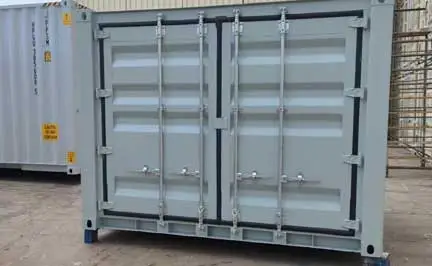
WFH's containers with customized accessories show how a standard container can be adapted into a more functional space. The available options support applications ranging from workspaces to mobile clinics and pop-up retail stores.
Insulation can be added when the interior needs better separation from outdoor temperature conditions. This is especially relevant when the container will be occupied or when HVAC is part of the fit-out. The appropriate insulation approach should be defined as part of the overall operating requirement rather than treated as an isolated accessory.
WFH lists pre-embedded components for shelving, lighting and HVAC among its customisation options. Planning these elements early can help the internal layout match the intended workflow. Buyers should identify where equipment, workstations, shelving and service points are expected to sit before specifications are confirmed.
Partition walls can divide a single container into separate functional areas. This can be useful for creating an office and storage zone, separating clean and service areas, or organising a mobile facility into multiple rooms. Where removable walls are part of the required concept, their position should be planned around access, circulation and installed equipment.
WFH lists lockboxes as a customisation option. For storage, tools, equipment or business use, access control should be considered alongside the physical layout. Security requirements can affect door arrangements, locking points and the way the unit is positioned on site.
Access requirements vary significantly between applications. A workspace may need a personnel entrance, while a storage or industrial application may need a wider or differently positioned opening. Door planning should consider how people, machinery or goods enter the unit and how the opening interacts with shelving, partitions and equipment inside.
WFH's specialised containers range includes a 20-foot dry container with a steel floor. A specialised floor can be relevant where the operating requirement differs from that of a general dry container. Buyers should describe the intended loading and use conditions so the appropriate floor configuration can be discussed.
Together, these options show that a custom container does not need to follow one fixed template. The final specification should be built around the application, including the required interior arrangement, access, climate control, security and installed services.
Some projects require more than a standard container with accessories. WFH's specialised range includes container formats designed around specific technical or industrial functions.
WFH offers a container energy storage system, or CESS. The verified product description includes inverters, battery cabinets, and management and control systems. WFH identifies power plants, islands and communities among the intended application environments.
This type of project illustrates how far a specialised shipping container can differ from a basic cargo box. The container becomes the physical platform for a defined technical system, so buyers need to communicate the application and system requirements clearly during the enquiry process.
WFH's specialised range also includes a 20-foot high-cube bulk container for products such as malt and coffee beans. The configuration uses roof openings for loading and hatches for discharge. This is a good example of customisation being driven directly by material-handling workflow: the unit is designed around how bulk cargo enters and leaves the container.
Another specialised family is the water tank-container for aquaculture using a recirculating aquaculture system, or RAS. WFH describes the RAS approach as minimising water usage and automating processes. For buyers in aquaculture, the application is therefore not simply container storage but a containerised operating system built around water management and production needs.
When one container is not enough, WFH's modular building service extends the concept into larger multi-module projects. WFH states that it designs and constructs custom modular buildings and lists delivered projects including a 238-module hotel in the USA, a 78-module hotel in Iceland, a 252-module hotel in Australia, a 10-module display center in Hong Kong, a 48-module apartment project in Sweden and a 115-module accommodation project in the UK.
These examples help define the difference between a customised single container and a modular construction project. A single unit may be enough for a workspace, mobile facility or specialised process. Where the requirement involves multiple rooms, larger occupancy or a more extensive building layout, a modular solution may be more appropriate.
Customisation changes how a container is used and can also change how loads, openings, electrical systems and internal fittings interact with the original structure. Safety therefore needs to be part of the specification from the beginning rather than checked only after the conversion is complete.
Protect structural integrity: WFH advises that modifications should be carried out by professionals so structural integrity is preserved. Cutting openings, adding doors or making other structural changes should not be treated as informal site alterations.
Address fire safety: Where insulation, electrical equipment or other installed systems are added, fire safety should be considered as part of the conversion.
Provide ventilation: Occupied spaces and equipment-based applications may require ventilation appropriate to their use.
Install heavy fittings securely: Shelving, machinery, cabinets and other fittings should be installed securely so they remain stable during normal operation and handling.
Keep access unobstructed: Doors, emergency routes and circulation areas should not be blocked by partitions, furniture, equipment or stored materials.
Inspect the unit regularly: WFH's guidance includes regular inspections after the customised container is put into service.
Compliance requirements can vary depending on the application, location and installed equipment. Buyers should therefore define any project-specific regulatory or site requirements during the enquiry stage and confirm what documentation, specifications or professional input will be needed. WFH does not publish blanket certification claims for every customised configuration, so applicable requirements should be confirmed for the individual project.
Ordering a customised container is easier when the project starts with a clear requirement rather than a list of accessories. A practical process can be organised into five stages.
Define the application and operating requirement. Explain what the container will be used for, who or what will be inside it, and how it needs to function in daily operation. This determines whether the project is a standard conversion, a specialised container or a modular building requirement.
Share cargo, site and environmental constraints. Provide information about cargo type, equipment, loading method, site access, available power, climate exposure and any dimensional restrictions. These factors can influence the configuration.
Review the proposed configuration and options. WFH can use the project brief to discuss an appropriate base container and relevant customisation options. This is the stage to align items such as insulation, partitions, shelving provisions, lighting, HVAC provisions, access and specialised fittings.
Confirm specifications and request a quote. Review the agreed configuration before commercial terms are finalised. Parameters such as minimum order quantity, dimensional or fabrication tolerances and lead time are not published as fixed values and should be confirmed with WFH during the enquiry.
Arrange delivery and installation requirements. Once the configuration and commercial details are agreed, delivery location, site access and any installation-related arrangements should be discussed for the specific project.
Buyers who are comparing base units before deciding on the conversion can also review WFH's shipping containers for sale. The container itself is only one part of the final requirement; the fit-out, specialised features and site arrangements need to be considered together.
A detailed enquiry gives the supplier a better basis for discussing configuration options and preparing a relevant quotation. Before contacting WFH, prepare as much of the following information as possible.
Application: Explain whether the unit is intended for a workspace, mobile facility, retail use, specialised storage, energy storage, bulk cargo, aquaculture or another defined purpose.
Required dimensions: State any important interior or exterior dimensional requirements and identify equipment or cargo that must fit inside the unit.
Operating environment: Describe the climate, expected exposure conditions and whether the container will operate indoors, outdoors or at a remote site.
Power availability: Explain what electrical supply is available at the site and what powered equipment will be installed.
Access requirements: Describe how people, goods or equipment will enter the container and whether special doors, openings or loading arrangements are needed.
Insulation and HVAC: State whether temperature control, insulation or HVAC provisions are required.
Electrical and lighting: List expected lighting, equipment and electrical requirements so provisions can be discussed during the configuration stage.
Internal layout: Identify shelving, partitions, removable walls, storage zones, work areas or equipment positions.
Budget range: If available, share the project budget range so the discussion can focus on configurations that match the commercial scope.
Timeline: State when the unit is required. Lead times are project-specific and should be confirmed directly with WFH.
Clear requirements reduce ambiguity and help make the quotation discussion more accurate. They also make it easier to identify early whether the project fits a customised single container, one of WFH's specialised container families or a larger modular solution.
If you are looking for customized containers for sale, start by reviewing WFH's containers with customized accessories and specialised containers. Then send your application, dimensional requirements, access needs, environmental conditions and required fittings so the configuration can be discussed.
To request a project-specific proposal and quotation, contact WFH through the website contact page. Enquiries can also be made through WhatsApp at +65-98209228 or by email at info@wfhwsg.com. Pricing, minimum order quantity, tolerances, delivery timing and other project-specific commercial or technical parameters should be confirmed directly with WFH for the proposed configuration.