English
Search

2026/10/24
When temperature-sensitive cargo must be stored or transported under controlled conditions, a reefer container can provide a practical containerised solution. For B2B buyers comparing a reefer container for sale, the key decisions usually involve size, capacity, equipment condition, intended duty, ownership model and delivery requirements. A unit that is suitable for temporary cold storage may not be evaluated in exactly the same way as one intended for repeated transport use, so the purchase decision should start with the operating requirement rather than with price alone.
WFH SG GROUP PTE LTD supplies new and used containers worldwide for sale and rent and provides international logistics services. Its refrigerated container range includes 20-foot RF, 40-foot RF and 40-foot high-cube RF units. This guide explains what a reefer is, compares published WFH specifications, outlines new-versus-used and rent-versus-buy considerations, and shows what information to prepare before requesting a quotation.
A reefer container, or refrigerated shipping container, is an insulated freight container fitted with powered equipment for controlling internal temperature. WFH describes its reefer units as being fitted with an electric or diesel cooling/heating unit and with insulated panels, roof and doors. They are intended for the transport and storage of temperature-sensitive goods.
The refrigeration system works through a controlled cycle involving key components such as a compressor, condenser and evaporator, together with temperature controls. In simple terms, the system removes heat from inside the container and rejects it outside, while the controls regulate operation around the selected temperature setting. WFH's 40-foot RF information also notes exterior digital temperature monitoring and controls.
This active temperature-control capability is what separates a reefer from a basic dry container. WFH identifies food and beverage, pharmaceutical and agricultural applications among the main industries served by refrigerated containers, and its reefer descriptions also include cargo such as fruits, vegetables, dairy products and floral goods.
Buyers considering refrigerated shipping containers should begin by defining the cargo, required temperature conditions, loading pattern and expected use. Those details affect the choice of container size and whether a new unit, used unit, rental or purchase is the more appropriate route.
WFH lists three main reefer size classes: 20' RF, 40' RF and 40' HC RF. The 20-foot unit is the more compact option, while the 40-foot high-cube reefer provides considerably more internal volume and additional external height. A standard 40-foot RF is also available for buyers who need a 40-foot refrigerated format without choosing the high-cube version.
| Specification | 20' RF | 40' HC RF |
|---|---|---|
| External dimensions | 6058 x 2438 x 2591 mm | 12192 x 2438 x 2891 mm |
| Internal dimensions | 5440 x 2280 x 2240 mm | 11580 x 2290 x 2540 mm |
| Tare weight | 3,000 kg | 4,700 kg |
| Payload | 27,480 kg | 29,300 kg |
| Capacity | 27 m³ | 67 m³ |
These are WFH's published figures for its 20' RF reefer container and 40' HC reefer container. When comparing capacity, remember that reefer internal dimensions are smaller than the corresponding external dimensions because insulation and refrigeration-related structures occupy space within the overall container envelope.
For cargo planning, cubic metres can also be converted to cubic feet. One cubic metre is approximately 35.3 cubic feet, so 27 m³ is about 953 cubic feet and 67 m³ is about 2,366 cubic feet. These conversions are useful for rough volume planning, but buyers should still work from the published internal dimensions and the actual shape, packaging and loading pattern of their cargo.
The right size is not determined by volume alone. A 20ft reefer container may be easier to position where site space is limited or where the cargo quantity is moderate. A 40ft reefer container can suit larger loads, while a 40ft high-cube option adds more height and volume. Buyers should also consider loading access, available site space, transport arrangements and the amount of clear internal space needed around the cargo.
Both new and used reefers can be legitimate buying options. The better choice depends on the intended duty, the condition of the refrigeration equipment, the expected period of use and the buyer's budget.
Machinery age and service history should be part of the discussion for a used reefer. The refrigeration system is an active mechanical system, so buyers should ask what information is available about servicing, maintenance and operating condition. WFH's 40-foot RF guidance states that regular inspections, cleaning and servicing should be carried out in line with manufacturer guidelines.
Insulation condition also matters because the reefer depends on insulated panels, roof and doors as well as powered refrigeration. Visible condition, door sealing and the physical state of the container should therefore be considered alongside the cooling equipment.
Intended duty is another important distinction. A buyer evaluating a refrigerated container for repeated transport use may focus on different operational requirements from a business using the unit primarily as on-site cold storage. The intended application should be stated clearly when discussing a used container so the supplier can understand the duty expected from the unit.
Budget is naturally part of the decision, but WFH does not publish fixed prices for new or used reefers. Rather than assuming that a used unit will always be the right economic choice, compare the condition, intended service, ownership duration and maintenance responsibility, then request a quotation for the options that fit the project.
WFH offers reefer containers for both sale and rental, so buyers can compare ownership with temporary use instead of treating purchase as the only route.
| Decision factor | Rental may suit you when | Purchase may suit you when |
|---|---|---|
| Duration | The requirement is temporary, seasonal or linked to a defined project. | The unit is expected to stay in use for a longer period or be reused. |
| Capital | You prefer to avoid committing purchase capital to a temporary need. | You prefer to own the container and plan around a longer ownership period. |
| Maintenance responsibility | You want to discuss the responsibilities that apply under the rental arrangement. | You are prepared to manage maintenance as part of owning the equipment. |
| Flexibility | Your size, quantity or location requirements may change. | Your use case is stable enough to justify ownership. |
There is no universal break-even period that can be stated without actual rental rates, purchase pricing, logistics costs and maintenance assumptions. For a short or uncertain requirement, shipping containers for rent may offer useful flexibility. For recurring or longer-term requirements, purchase may be worth comparing on a total-cost and operational basis.
When requesting a quote, ask WFH to evaluate the same basic requirement under both rental and purchase if you are undecided. That makes the comparison more meaningful because the container size, delivery location and intended use remain consistent.
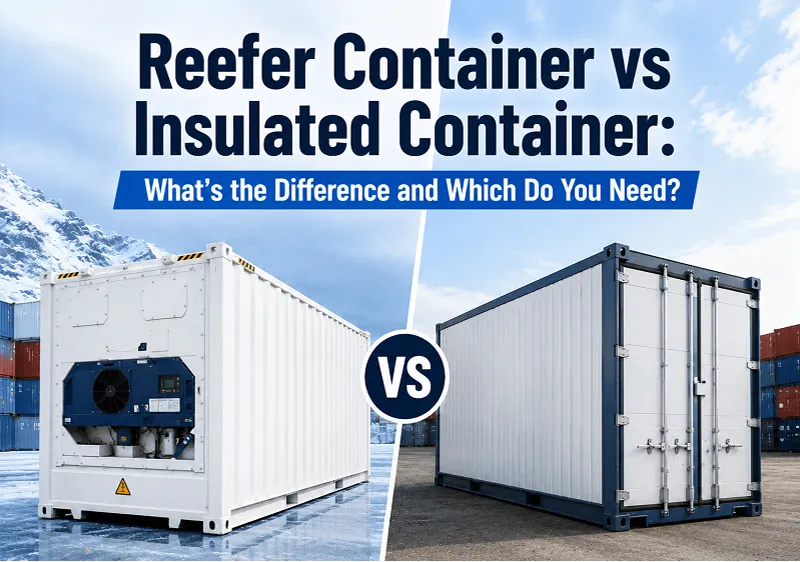
A reefer and an insulated container are not the same thing. An insulated container relies on passive insulation to slow heat transfer between the interior and exterior. It does not, by definition, provide powered refrigeration. A reefer uses active temperature-control equipment to maintain the required internal condition.
That distinction is important because cargo that merely benefits from reduced temperature fluctuation is different from cargo that requires active control. If the shipment or stored goods need a powered system to hold a target temperature, a reefer is the relevant category to evaluate. If the requirement is only thermal buffering without active cooling, an insulated container may be a different option.
For a more focused comparison, see WFH's article on reefer vs insulated container.
Before asking for a final quotation, it helps to turn the application into a short specification. This avoids comparing containers that differ in ways that matter operationally.
Cargo type: Identify whether the unit will store food products, pharmaceuticals, agricultural goods, floral products or another temperature-sensitive cargo.
Target temperature: State the temperature requirement so the supplier understands the operating condition expected from the unit.
Container size: Decide whether you prefer 20' RF, 40' RF or 40' HC RF, or ask for guidance based on cargo volume and site constraints.
New or used: State whether you are open to both options and what duty the unit will perform.
Rent or buy: Explain the expected duration so both routes can be considered where appropriate.
Delivery location: Provide the destination so transport arrangements can be included in the discussion.
Intended duty: Clarify whether the reefer will be used for transport, stationary cold storage or another specific operating scenario.
Maintenance expectations: Ask what maintenance information is relevant to the proposed unit and how servicing responsibilities apply to the chosen purchase or rental arrangement.
WFH does not publish fixed reefer pricing, lead times, warranty terms or certification claims for every unit. Those parameters should be confirmed for the specific container being quoted rather than assumed from a general product description.
A clear enquiry makes it easier to discuss the correct refrigerated shipping container from the start. Prepare the cargo type, target temperature, preferred size, new-or-used preference, rent-or-buy preference and delivery location before contacting WFH.
If you already know the required size, review the published details for the 20' RF reefer container or 40' HC reefer container. If you are still comparing configurations, start from WFH's main refrigerated shipping containers page, which lists the 20' RF, 40' RF and 40' HC RF options.
WFH's 20' RF page includes a Get A Quote form. Buyers can also contact WFH through the website contact page, WhatsApp at +65-98209228 or email at info@wfhwsg.com.
When requesting a reefer container for sale, include the size, cargo and temperature requirement, whether you prefer new or used, whether rental should also be compared, and the delivery location. WFH can then discuss the available route and provide project-specific quotation details without relying on generic pricing assumptions.