English
Search

2026/10/20
Side door and double door shipping containers solve different access problems. A side door container opens along one full side, creating broad access to the cargo area, while a double door container has doors at both short ends so users can enter or load from either end. Neither configuration is universally better. The right choice depends on cargo shape, loading equipment, site layout and how often different parts of the container need to be accessed.
For warehouse managers, construction suppliers, machinery dealers and logistics coordinators, door layout can affect daily handling just as much as container length. A unit with the right internal volume can still be inconvenient if the doors do not match the loading process. This guide compares the two configurations sold and rented by WFH and explains when side access or dual-end access is likely to be more practical.
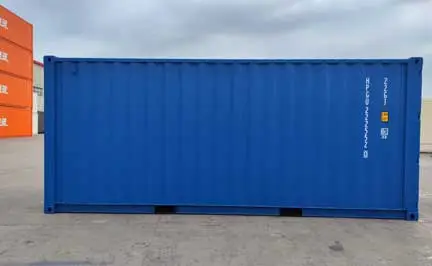
An open side container, also called a side door container, has doors opening along the entire length of one side. WFH states that the side can use steel doors or tarpaulin, depending on the configuration. Its 20-foot side door model uses one set of double-leaf side doors spanning the full length of one side, and those doors can be opened fully or partially.
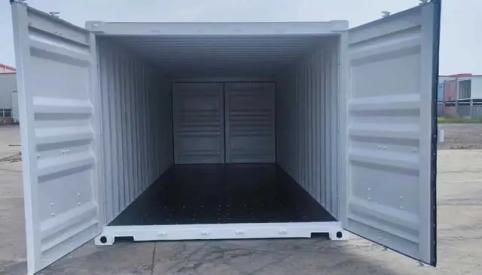
A double door container, sometimes called a tunnel container, has double doors at both ends. Instead of creating a large opening along the long side, it gives users access from either short end of the container. WFH offers 10-foot, 20-foot and 40-foot double door models for sale or rent.
The operational difference is straightforward. Choose side access when the long side of the container needs to become the main loading face. Choose dual-end access when the workflow benefits from entering, loading or picking goods from either end. Cargo dimensions and site access should determine the configuration, not a general assumption that one door style is superior.
The defining feature of a side door container is the full-length opening along one side. WFH's 20' side door container can be opened fully or partially, giving the operator flexibility over how much of the side is exposed during loading or access.
WFH states that loading and unloading can be carried out by forklift, crane or manual labour. This makes the configuration useful when goods are easier to approach from the side than through conventional end doors. Palletised cargo, machinery, construction materials and other bulky items can be positioned along the container length without requiring every item to pass through one narrow end-access route.
Long or awkwardly shaped cargo can also benefit from side access. Pipes, construction materials, large equipment or machinery may be easier to load when the opening runs along the container rather than only across its width at one end. The same principle can help when multiple pallets need to be accessed independently instead of being arranged in a deep sequence from front to back.
WFH also notes that open side containers can support customizable partitioning with removable walls or curtains. This can be useful when the interior needs separate storage zones or when only part of the container should be opened at a time. While the side is open, WFH identifies improved ventilation and visibility as additional practical benefits.
The main planning question is whether the site has enough clear space alongside the container to use those side doors effectively. A side-opening design is most valuable when operators, forklifts or cranes can approach the long side without obstructions.
A double door shipping container uses double doors at both short ends. This creates a walk-through or tunnel-style access pattern and allows goods to be reached from either end. For storage operations, that can reduce the need to remove items from one end simply to reach stock positioned at the opposite end.
Two-end access can be helpful in yards, workshops and warehousing environments where the container sits between two working areas or where staff need to pick goods from different ends. It can also support segmented storage. For example, two stock-keeping units or two groups of materials can be arranged toward opposite ends so each group has a more direct access point.
WFH describes double door containers as suitable for storing large items and organising goods efficiently. Because doors are located at both ends rather than across the full side, the configuration preserves the long side walls for storage layout while improving access through the container length.
A 20' double door container can suit operations that need dual access within a relatively compact footprint, while a 40' double door container provides a longer storage space with access from both ends. WFH also lists a 10-foot double door model for smaller requirements.
The key site consideration is clearance at both ends. A double door container only delivers its full operational benefit if both door sets can be opened and used. If one end will be permanently blocked by a wall, fence or other equipment, the buyer should consider whether a different layout would make better use of the available space.
| Decision factor | Side door / open side container | Double door container |
|---|---|---|
| Access pattern | Full-length opening along one side; doors can be opened fully or partially on WFH's 20' SD. | Double doors at both short ends for access from either end. |
| Best loading method | Useful for side loading by forklift, crane or manual handling. | Useful for end loading, walk-through access and picking from either end. |
| Ideal cargo profile | Machinery, construction materials, long items, bulky goods and palletised goods that benefit from side access. | Large stored items, organised stock and cargo that benefits from two-end access or segmented storage. |
| Site footprint needs | Requires usable clearance along the opening side so doors and loading equipment can operate. | Requires usable clearance at both ends if both door sets are to remain functional. |
| Partitioning flexibility | WFH notes customizable partitioning with removable walls or curtains. | Can support organised or segmented storage with access from opposite ends. |
| Sizes available at WFH | 20' SD. | 10' DD, 20' DD and 40' DD. |
| Rental availability | Available to rent from WFH. | Available to rent from WFH. |
The table highlights why this is a workflow decision rather than a quality ranking. A side door shipping container is attractive when the long side needs to act as the main loading interface. A double door storage container is attractive when the operation needs access through both ends or wants to organise stock around two separate entry points.
Side-loading pallets: If forklifts need to approach individual pallet positions along the container length, a side door container is likely to be the more natural configuration.
Long construction materials or pipes: If cargo is easier to place from the side than through an end opening, consider the open side format.
Machinery or bulky equipment: WFH identifies machinery, construction materials and large equipment as suitable open side applications, especially where wide, unobstructed access is useful.
Frequent access from two directions: If operators need to enter or pick goods from either end, a double door container is the stronger match.
Segmented storage: If two categories of stock will be stored toward opposite ends, dual-end access can make organisation more practical.
Yard or workshop flow: A double door unit may suit a location where the container connects two working areas and both ends can remain accessible.
Confined sites: Do not choose only by cargo type. Check the available clearance for side-door swing or end-door swing and discuss the placement with the supplier before ordering.
If you are comparing an open side design with a conventional end-door unit rather than a double door model, WFH also publishes a separate guide on open side vs standard shipping container.
Door configuration and container length should be considered together. WFH's open side lineup in this comparison is the 20' SD, while its double door range includes 10', 20' and 40' DD units. That means buyers who specifically require a 40-foot container with access from both ends can evaluate the 40' DD option, whereas the verified WFH open side model discussed here is the 20' SD.
A 20-foot unit may be appropriate where the cargo volume is moderate, the placement area is tighter or the operation benefits from a more compact unit. A 40-foot double door container gives more length for storage and allows both ends to remain accessible, but the site must accommodate the longer unit as well as door clearance and handling space.
Do not select length based on volume alone. Consider how loading equipment approaches the container, how often stock needs to be accessed, whether the unit will be partitioned, and whether operators can use the intended doors after placement. The best configuration is the one that fits both the cargo and the site workflow.
WFH offers both open side and double door families for sale and rent. Its shipping containers for rent range includes the 20' SD and 10', 20' and 40' DD models with flexible rental terms.
Rental can be considered when the requirement is temporary, project-based or likely to change. Purchase may be worth considering when the container is expected to remain in use for a longer period or be reused across operations. WFH does not publish fixed prices or lead times for these configurations, so the practical approach is to request a quotation based on the actual size, door layout, rental or purchase preference and delivery requirements.
WFH's verified lineup for these two door configurations includes one 20-foot side door model and three double door sizes:
20' SD: full-length side access with double-leaf side doors.
10' DD: compact double door option with access at both ends.
20' DD: 20-foot double door format for dual-end access.
40' DD: longer double door format for larger storage requirements with access from both ends.
Before asking for a quote, prepare a short operating brief. Include the cargo type, approximate cargo dimensions, loading equipment, preferred container size, site access conditions and whether side access or two-end access seems more important. Also state whether you want to buy or rent.
If forklifts, cranes or other handling equipment will be used, explain how they will approach the container. If the site is confined, note any walls, fences, neighbouring equipment or other obstacles that could affect door operation. These details help turn a general product enquiry into a configuration discussion based on the actual workflow.
Buyers focused on full-length side access can review WFH's open side containers and the 20' side door container. Buyers who need access from both ends can review WFH's double door containers, including the 20' double door container and 40' double door container.
To discuss which configuration fits your cargo and site access, contact WFH through the website contact page, WhatsApp at +65-98209228 or email at info@wfhwsg.com. Share your cargo type, loading method, site access, preferred size and rent-or-buy requirement so WFH can discuss the appropriate side door or double door configuration and provide a project-specific quotation.