English
Search

2026/05/30
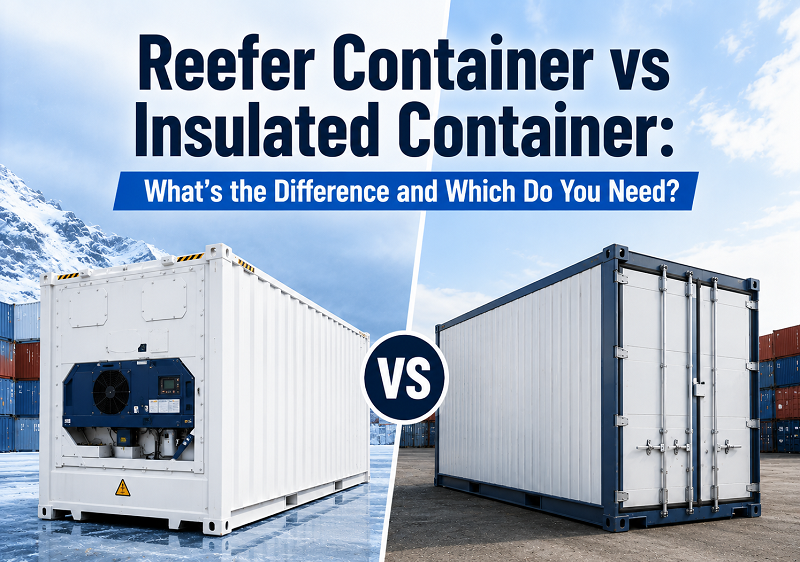
The difference between a reefer container and an insulated container comes down to one essential factor: active cooling versus passive temperature protection.
If your cargo requires precise temperature control—such as frozen foods, pharmaceuticals, seafood, dairy, or temperature-sensitive chemicals—a reefer container is usually the necessary choice. If you simply need to reduce temperature fluctuations or protect products from heat exposure during transport or storage, an insulated container may offer a more cost-effective solution.
Many buyers assume insulated containers can perform like refrigerated containers. In reality, insulation slows temperature change, but it does not actively cool cargo.
Understanding this difference is critical because choosing the wrong container can result in cargo spoilage, higher operating costs, or unnecessary overspending.
This guide compares reefer and insulated containers from a practical purchasing perspective—covering performance, costs, applications, logistics, and which option better fits your operational needs.
| Factor | Reefer Container | Insulated Container |
Cooling Capability | Active refrigeration | No active cooling |
Temperature Control | Precise and adjustable | Passive insulation only |
Power Requirement | Yes | No |
Best For | Perishable cargo | Temperature buffering |
Operating Cost | Higher | Lower |
Maintenance | More complex | Simpler |
Temperature Range | Controlled cooling/freezing | Ambient moderation |
Purchase Price | Higher | More affordable |
The simplest way to think about it:
A reefer container creates and maintains temperature, while an insulated container only slows temperature changes.
That distinction matters enormously depending on cargo sensitivity.
A reefer container (refrigerated container) is a shipping container equipped with an integrated refrigeration unit capable of actively controlling internal temperature.
These containers are commonly used for:
Frozen food
Fresh produce
Seafood
Dairy products
Meat and poultry
Pharmaceuticals
Medical supplies
Temperature-sensitive chemicals
Unlike standard containers, reefers continuously regulate temperature during transport or storage.
They can maintain:
Frozen temperatures
Chilled environments
Controlled fresh-product conditions
A reefer unit requires an external power source to operate.
A 20ft reefer container works well for:
Smaller cold storage operations
Limited cargo volumes
Urban logistics environments
Pharmaceutical storage
Because of its smaller footprint, it is often easier to position and transport.
A 40ft reefer container is better suited for:
Large-volume cold storage
Food distribution businesses
Export logistics
Long-term commercial refrigeration needs
Businesses handling high cargo turnover often prefer this size for operational efficiency.
A high cube reefer container offers additional internal height.
Benefits include:
Increased cargo volume
Better airflow for stacked products
Improved storage flexibility for palletized goods
This is particularly valuable for businesses moving high-volume temperature-controlled inventory.
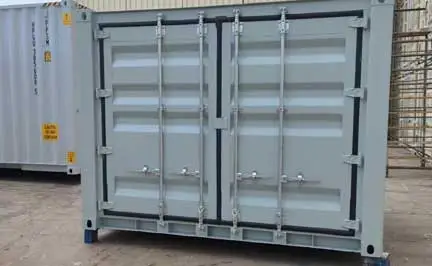
An insulated container is designed to reduce heat transfer between the inside and outside environment but does not generate cooling.
These containers use thermal insulation materials to help stabilize temperatures temporarily.
Think of them as a large insulated box rather than a refrigerator.
Insulated containers are commonly used for:
Dry goods sensitive to heat
Chocolate and confectionery
Electronics
Chemicals needing temperature buffering
Temporary thermal protection during transport
They help minimize temperature swings but cannot maintain exact temperatures independently.
If external temperatures become extreme, internal cargo temperatures will eventually follow.
A reefer container is usually the safer investment when cargo failure is not an option.
Products requiring strict temperature ranges need active refrigeration.
Examples include:
Frozen seafood
Vaccines
Biotech materials
Ice cream
Meat exports
Even a few degrees of temperature deviation can create:
Product spoilage
Compliance failures
Financial losses
Insurance claims
In these situations, an insulated container is generally insufficient.
Longer transit periods increase risk.
A 40ft reefer container becomes particularly valuable for:
International ocean freight
Long-haul trucking
Multi-day logistics routes
Refrigeration protects cargo consistency throughout transport.
Many companies purchase reefers for stationary use as:
Backup refrigeration
Overflow cold storage
Seasonal storage capacity
A 20ft reefer container often works well for smaller facilities needing flexible refrigerated storage.
Buying a reefer when refrigeration is unnecessary often results in avoidable costs.
Some products do not require active cooling but still benefit from protection against heat spikes.
Examples include:
Paint products
Electronics
Industrial chemicals
Certain packaged foods
An insulated container can reduce temperature swings without refrigeration expenses.
For short-distance transportation, passive insulation may provide adequate protection.
If cargo moves quickly and temperatures are moderate, refrigeration may not justify the additional cost.
Insulated containers have major cost advantages:
No electricity requirements
Lower maintenance costs
Fewer mechanical components
Reduced repair risks
For budget-sensitive operations, this simplicity can provide better ROI.
One of the biggest differences between these options is cost.
Why?
Because reefer containers include:
Refrigeration systems
Air circulation technology
Electrical components
Temperature monitoring systems
Operating expenses also increase due to:
Electricity consumption
Mechanical servicing
Refrigeration maintenance
A 40ft reefer container typically costs significantly more than an insulated unit, especially for long-term ownership.
Insulated containers generally require:
Less maintenance
No power source
Minimal mechanical repairs
However, lower cost only matters if the container still protects the cargo adequately.
Choosing cheaper equipment that damages products rarely saves money.
This is often the deciding factor.
A reefer container actively maintains target temperature regardless of outside conditions.
For example:
External temperature: 35°C (95°F)
Internal reefer setting: 2°C (36°F)
The system continuously works to maintain cargo conditions.
Insulated containers only slow heat transfer.
External heat eventually impacts internal temperature.
Performance depends on:
Outside weather
Duration of transport
Sun exposure
Cargo density
Frequency of door openings
For sensitive products, this unpredictability introduces risk.
The answer depends on operational scale.
Space is limited
Cargo volume is moderate
You need mobile cold storage
Transport flexibility matters
High-volume storage is required
Export logistics involve larger shipments
You need better cost efficiency per cubic foot
Extra storage capacity matters
Pallet stacking is important
Airflow optimization is needed
A high cube reefer container is especially useful in logistics operations prioritizing maximum storage efficiency.
Choose a reefer container if you need:
Active refrigeration
Strict temperature control
Long-distance cold-chain shipping
Pharmaceutical or food safety compliance
Reliable cold storage
Choose an insulated container if you prioritize:
Lower costs
Temperature buffering rather than cooling
Short transport durations
Protection from moderate heat exposure
The most expensive mistake is assuming insulation equals refrigeration.
If temperature stability directly affects product quality, reefer containers almost always justify the investment.
A reefer container actively cools cargo using refrigeration systems, while an insulated container only slows temperature changes.
Not permanently. It helps preserve temperatures temporarily but cannot actively cool products.
A 20ft reefer container is ideal for smaller cold storage needs, urban logistics, or moderate shipment volumes.
A 40ft reefer container is generally better for large-scale logistics and bulk temperature-controlled cargo.
A high cube reefer container provides extra interior height for improved storage volume and airflow.
Yes, compared with insulated containers. Refrigeration systems require electricity, servicing, and periodic maintenance.
This is the first one.