English
Search

2026/05/28
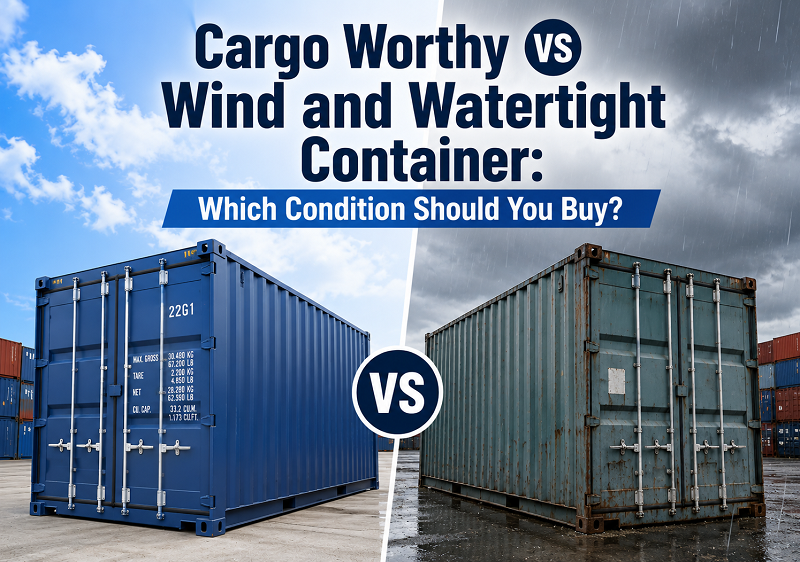
Choosing between a Cargo Worthy (CW) container and a Wind and Watertight (WWT) container comes down to one critical question: Will the container be used for shipping or storage?
If you plan to transport goods internationally, a Cargo Worthy container is usually the safer choice because it meets structural and transport-related standards. If the container will stay in one location for storage, construction, or operational use, a Wind and Watertight container often provides better value at a lower cost.
The mistake many buyers make is paying for shipping-grade certification when they only need secure storage—or buying a lower-grade container only to discover later it cannot be used for cargo transport.
This guide explains the real-world differences, pricing trade-offs, and how to choose the right condition for your operational needs.
| Factor | Cargo Worthy (CW) Container | Wind and Watertight (WWT) Container |
Primary Use | International shipping + storage | Storage only |
Structural Condition | Higher inspection standards | Functional but less strict |
Weather Protection | Yes | Yes |
Water Leakage | No active leaks | No active leaks |
Shipping Certification | Typically cargo-eligible | Usually not shipping-certified |
Cost | Higher | More budget-friendly |
Cosmetic Condition | Moderate wear possible | Often more visible wear |
Best For | Export, logistics, resale value | Job sites, warehouses, local storage |
The most important difference is this:
A Cargo Worthy container is suitable for cargo transportation, while a Wind and Watertight container is primarily intended for static storage use.
Both may look similar from the outside, but their inspection standards and permitted applications differ significantly.
A Cargo Worthy (CW) container is a used shipping container that has been inspected and deemed structurally suitable for transporting cargo.
This means it generally meets standards related to:
Structural integrity
Door functionality
Floor condition
Weather resistance
Safe stacking capability
Transport readiness
A CW container may still show cosmetic wear such as dents, faded paint, or surface rust. “Cargo worthy” does not mean “like new.”
Instead, it means the container remains operational for logistics purposes.
A CW container is usually the better choice for:
International freight shipping
Export cargo movement
Overseas relocation projects
Long-term asset ownership
Businesses needing resale flexibility
If there is any chance the container will later enter the shipping network, investing in CW condition often avoids future complications.
A Wind and Watertight (WWT) container is designed to provide secure, weather-resistant storage but may not qualify for cargo transportation.
The term means:
No major holes
No active water leaks
Doors can close properly
Interior remains protected from weather exposure
However, a WWT container may have:
More cosmetic wear
Older flooring
Repairs or patches
Minor dents affecting appearance
Structural issues that disqualify cargo transport certification
In practical terms, a WWT container is built for protection rather than transportation.
WWT containers are often ideal for:
Construction site storage
Equipment storage
Farm and agricultural use
Warehouse overflow
Tools and inventory storage
Temporary project use
If the container never leaves the property, paying extra for shipping compliance may offer limited value.
In most markets, Cargo Worthy containers cost more than Wind and Watertight containers.
Why?
Because CW units meet stricter usability requirements for transportation.
The premium often reflects:
Better structural condition
Higher inspection standards
Greater resale flexibility
Shipping eligibility
However, paying more does not automatically mean better value.
A buyer storing landscaping equipment or construction materials may gain little benefit from cargo-grade certification.
The smarter question is:
Are you paying for capability you actually need?
A Cargo Worthy container becomes the better investment in several situations.
This is the clearest case.
If your container will move through ports or international freight systems, CW condition reduces the risk of:
Inspection failures
Cargo rejection
Transport delays
Additional repair expenses
Buying a cheaper WWT container and later upgrading it for shipping often becomes more expensive.
Even if you are not shipping immediately, operational plans can change.
A CW container preserves future options:
Export usage
Easier resale
Relocation projects
Logistics expansion
For businesses, flexibility has value.
CW containers often perform better for:
Heavy machinery storage
Stacked loading
Long-term outdoor exposure
High-value inventory protection
Although both container grades offer protection, structural consistency is usually stronger in cargo-worthy units.
Many buyers actually overpay by choosing Cargo Worthy when a WWT container would have worked perfectly.
If the container stays permanently on-site, WWT often provides better ROI.
This applies to:
Construction companies
Manufacturing yards
Agricultural operations
Small businesses needing overflow storage
Functionality matters more than certification.
WWT containers typically offer lower upfront costs.
If your focus is:
Secure storage
Weather resistance
Temporary usage
A WWT unit may free up budget for other operational expenses.
For industrial environments, cosmetic imperfections rarely matter.
A dented container that keeps equipment dry may perform just as effectively as a cleaner unit.
Usually, no—or at least not without inspection and possible repairs.
Many WWT containers fail shipping eligibility because of issues such as:
Structural damage
Floor deterioration
Door sealing problems
Missing certification compliance
Some suppliers may offer upgrades or repairs, but costs can quickly eliminate any initial savings.
If shipping is even a moderate possibility, starting with a CW container is often the safer financial decision.
Regardless of condition grade, inspection matters.
Before purchasing, check:
Roof dents can create standing water, increasing corrosion risk over time.
Doors should open smoothly and seal tightly.
Poor door alignment often signals structural stress.
Inspect for:
Rot
Chemical contamination
Soft spots
Excessive wear
Look inside during daylight.
If light enters through gaps, water likely can too.
Surface rust is common and manageable.
Deep corrosion near structural points is more concerning.
Patchwork repairs are not necessarily bad—but poor welding quality can create future issues.
A reputable supplier should clearly explain container condition rather than using vague descriptions.
There is no universal winner.
The better investment depends on operational needs.
Choose Cargo Worthy containers if you need:
Shipping capability
Better resale flexibility
Higher structural standards
Long-term logistics reliability
Choose Wind and Watertight containers if you prioritize:
Cost savings
Secure static storage
Temporary projects
Industrial practicality
In many cases, businesses overspend by buying cargo-grade containers when storage-grade performance would have been sufficient.
At the same time, underestimating future shipping needs can become equally expensive.
The most cost-effective decision is buying the condition grade that matches how the container will actually be used.
Not necessarily. Cargo Worthy is better for shipping applications, while Wind and Watertight often offers better value for storage-only use.
A proper WWT container should not have active leaks. However, inspection quality varies, so checking condition before purchase is important.
No. Many CW containers are heavily used but still structurally suitable for transport.
Yes, in most cases. A quality WWT container can provide years of weather-resistant storage.
Yes. Many container modification projects start with WWT units, especially when shipping certification is unnecessary.
Cargo Worthy containers generally retain stronger resale demand because they can serve both shipping and storage markets.