English
Search

2026/05/27
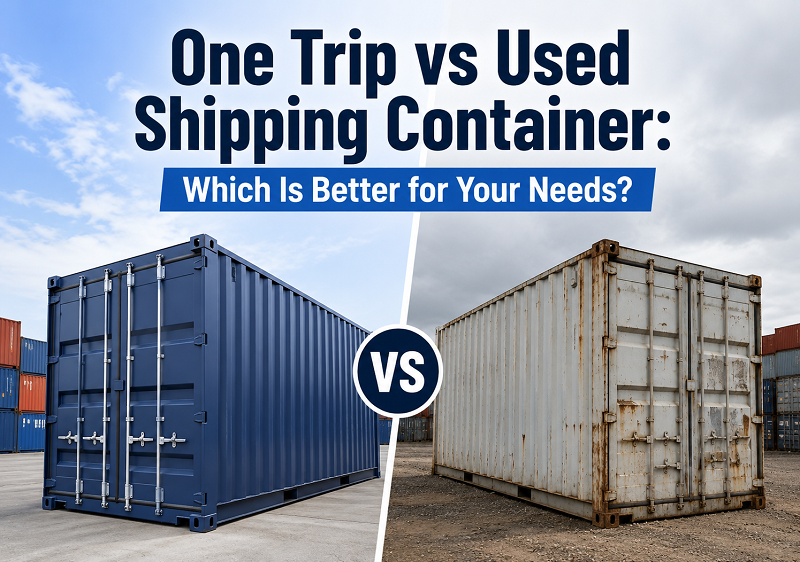
Choosing between a one trip and used shipping container depends less on which option is “better” and more on how long you plan to use it, what condition standards you require, and whether buying or renting makes more financial sense.
If appearance, durability, and long-term reliability matter most—especially for export, retail, premium storage, or container modification projects—a one trip container is usually the stronger investment. If budget is the priority or the container will be used for temporary storage, construction sites, or short-term logistics, a used shipping container often delivers better value. For temporary needs, used shipping containers for rent may be the most cost-efficient solution.
In this guide, we compare real-world trade-offs, costs, lifespan, and ideal use cases so you can make a confident decision.
| Factor | One Trip Container | Used Shipping Container |
Condition | Near-new | Varies by age and usage |
Appearance | Minimal dents, cleaner exterior | Cosmetic wear common |
Structural Integrity | Excellent | Depends on maintenance history |
Lifespan | Longer remaining service life | Shorter remaining life |
Cost | Higher upfront investment | More budget-friendly |
Maintenance | Lower in early years | Higher likelihood of repairs |
Best For | Long-term storage, modifications, exports | Budget storage, temporary projects |
Rental Availability | Less common | Widely available |
The biggest difference comes down to condition versus cost efficiency.
A one trip container has typically made only a single cargo journey after manufacturing. A used container may have spent years moving internationally, resulting in visible wear, surface rust, dents, or floor aging.
That does not necessarily mean used containers are poor quality—many remain highly functional for years—but inspection becomes much more important.
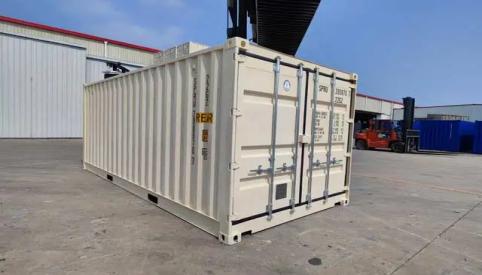
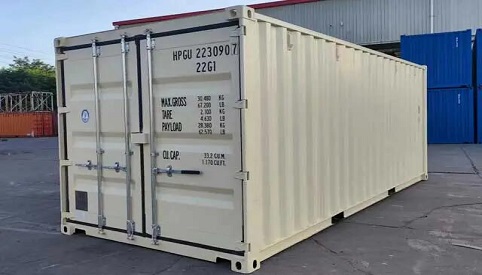
A one trip container is a newly manufactured container that has been used for cargo transport only once, usually from the factory to its destination market.
Because shipping empty containers internationally is inefficient, manufacturers commonly load cargo into new containers and ship them overseas. After arrival, these containers are sold as “one trip.”
A 20ft high cube one trip container is especially popular for buyers seeking additional internal height without sacrificing a compact footprint. Compared with a standard 20ft container, the extra vertical space improves usability for oversized storage, equipment, and customized modifications.
Typical features include:
Minimal rust or corrosion
Factory-quality paint finish
Better door seals and locking mechanisms
Cleaner plywood flooring
Fewer dents or structural imperfections
For companies that care about presentation, reliability, or lower maintenance over time, one trip units are often preferred.
A used shipping container has already spent years in active circulation within the global shipping network.
Most have completed numerous ocean voyages and may show:
Surface rust
Scratches and dents
Floor wear
Previous repairs or patches
Fading paint or cosmetic damage
However, many used containers remain cargo-worthy (CW) or wind and watertight (WWT), making them perfectly suitable for storage and industrial use.
The key is understanding the grade and intended purpose.
For example:
Suitable for transport and structural reliability, though cosmetic wear is expected.
Good for storage but may not meet shipping certification standards.
Lowest-cost option with potentially significant repairs needed.
A lower price can make used containers highly attractive, but quality inspection becomes critical.
Paying extra for a one trip container is justified in several scenarios.
If you expect to use the container for 10+ years, a newer unit may lower overall maintenance expenses.
Cheaper upfront does not always mean cheaper long term.
A heavily used container might require:
Rust treatment
Roof repairs
Door alignment fixes
Floor replacement
When these expenses accumulate, the price gap narrows quickly.
A cleaner appearance matters for:
Retail container conversions
Cafes and pop-up stores
Container offices
Residential modifications
Premium storage facilities
Customers notice visual condition.
A near-new container reduces refurbishment work significantly.
Businesses shipping overseas often prefer one trip containers because:
They are more likely to pass inspections
Structural integrity is stronger
Door sealing is more reliable
There is lower risk of cargo damage claims
For export operations, avoiding delays matters more than saving a small amount upfront.
If you are storing machinery, electronics, inventory, or moisture-sensitive goods, newer containers reduce risk.
Better seals and fewer structural weaknesses mean improved protection.
Used containers can offer excellent value when expectations align with the application.
If aesthetics are not a concern, used containers can be highly practical for:
Construction sites
Farm equipment storage
Industrial yards
Temporary warehousing
Tools and material storage
In these environments, functionality matters more than appearance.
Buying a premium container for a six-month project may not make financial sense.
In many cases, used shipping containers for rent become the smarter option.
Renting works especially well for:
Temporary construction storage
Seasonal inventory overflow
Event logistics
Renovation projects
Short-term site offices
Instead of paying a high upfront cost, companies preserve cash flow and avoid resale concerns later.
If a business needs multiple units, cost differences add up quickly.
For example:
Buying ten one trip containers may dramatically increase project cost versus sourcing quality used units.
In many industrial applications, function outweighs cosmetics.
This decision often matters just as much as choosing between one trip and used.
You need the container for multiple years
You want to customize or modify it
Long-term storage is required
Asset ownership offers better ROI
Buying provides more control and long-term value.
The project is temporary
Budget flexibility matters
Storage needs fluctuate seasonally
You want to avoid maintenance responsibility
Many companies exploring used shipping containers for rent find rental more economical than ownership for projects under 12–24 months.
The break-even point often depends on duration, transport costs, and resale expectations.
For many buyers, yes.
A 20ft high cube one trip container provides extra headroom while maintaining a manageable footprint.
Benefits include:
The added internal height improves stacking capacity and storage flexibility.
Higher ceilings work better for:
Workshops
Mobile offices
Container retail spaces
Equipment housing
Personnel working inside the container often appreciate improved interior clearance.
However, if you simply need basic storage for tools or materials, a standard used container may still be more cost-effective.
There is no universal answer because maintenance and environment matter.
Typical expectations:
| Container Type | Estimated Remaining Lifespan |
One Trip Container | 20–30+ years |
Quality Used Container | 8–15+ years |
Coastal environments, humidity, and maintenance quality significantly affect longevity.
Routine maintenance helps extend service life:
Rust prevention treatment
Roof inspections
Door lubrication
Drainage management
Repainting damaged areas
A well-maintained used container can still outperform a neglected newer unit.
Never buy solely based on photos or price.
Check:
Look for major dents affecting wall alignment or roof integrity.
Doors should open and close smoothly without excessive force.
Inspect for rot, contamination, or soft spots.
Check for daylight leaks inside.
Surface rust is normal. Deep corrosion is a red flag.
Make sure certifications remain valid for export purposes.
A trustworthy supplier should provide transparent condition details and recommend suitable grades based on your intended use.
There is no one-size-fits-all answer.
Choose one trip containers if you value:
Longer service life
Better aesthetics
Lower maintenance risk
Export readiness
Premium modifications
Choose used containers if you prioritize:
Lower upfront costs
Temporary applications
Industrial practicality
Budget optimization
Choose used shipping containers for rent if your need is short term and flexibility matters more than ownership.
The best choice is the one that matches your operational goals—not simply the cheapest or newest option.
Not technically. It has usually completed one international shipment after manufacturing but remains close to new condition.
Yes, if they are structurally sound and wind/watertight. Condition grading matters.
For short-term projects, renting is often cheaper. Long-term use generally favors buying.
Typically yes. Because wear is minimal, maintenance needs are lower in the first several years.
It offers extra height, better storage flexibility, and cleaner condition while remaining compact enough for sites with limited space.
Yes, but additional refurbishment may be required depending on condition, especially for appearance and insulation.