English
Search

2026/08/14
For cross-border e-commerce operators and foreign trade sellers, ocean freight boasts low costs yet involves lengthy lead times and numerous procedures. In many cases, cargo detention, fines or hefty port demurrage arise simply due to poor coordination at a fundamental stage. This article breaks down the full FCL (Full Container Load) export shipping process into six core steps to help you grasp every detail.
Core procedure: Fill out the SLI (Shipper’s Letter of Instruction). You need to provide accurate cargo description, number of packages, gross weight, volume, port of loading, port of discharge and estimated time of departure (ETD). Confirmation document: Once the freight forwarder successfully books space with the carrier, a shipping order (SO) will be issued. Only upon receiving the SO is your container space secured on the vessel.
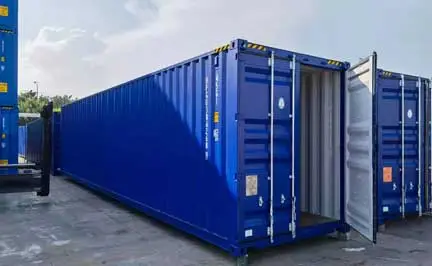
Upon receipt of the SO, you may proceed to load goods into the container. Core procedures:
The trucking company presents the SO at the designated terminal depot to collect an empty container.
The empty container is hauled to your factory, or you deliver goods to the forwarder’s consolidation warehouse for stuffing.
Once loading is completed, the container door is sealed with a uniquely numbered security seal.
Key Tip: Take photos throughout loading. Four photos are recommended: empty container, half-stuffed container, fully loaded container, and sealed container with security seal. These serve as critical evidence for insurance claims if cargo damage or loss occurs during transit.
After stuffing, the loaded container is returned to the designated terminal depot awaiting customs inspection. Core procedures:
Gate-in: The loaded container enters the terminal depot, and the truck driver obtains a dock receipt (equipment interchange receipt).
Customs Declaration: The shipper or customs broker submits documents including commercial invoice, packing list, customs declaration form and customs power of attorney to customs.
Two possible outcomes:
Clearance Released: Customs verifies all information and releases the cargo for loading.
Customs Inspection: If selected for random inspection to verify commodity descriptions and screen for prohibited goods, the container will be moved to the inspection area. Cargo will still be released after inspection provided all goods comply with regulations, though this may cause a delay of 1–2 days.
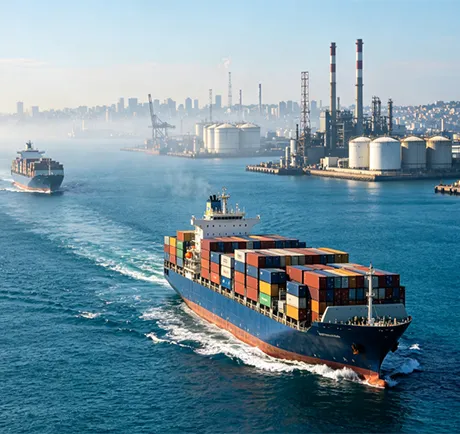
Customs clearance release qualifies the container for loading on board. Core procedure: Container cranes at the terminal lift containers onto the ocean vessel. After vessel departure, the carrier issues the Bill of Lading (B/L).
Key Definitions: ETD (Estimated Time of Departure): Estimated vessel departure date ETA (Estimated Time of Arrival): Estimated vessel arrival date at destination port
Importance of B/L: The bill of lading is a document of title. Only the holder of the original B/L or telex release notification can take delivery of cargo at destination. It acts as the core document for presentation under L/C (Letter of Credit) and final payment collection.
Several days prior to vessel arrival at destination (before ETA), destination clearance arrangements must be initiated in advance. Core procedures:
The overseas agent sends an Arrival Notice (AN) to the consignee.
The destination customs broker submits commercial invoice, packing list and B/L to local customs for import declaration.
The consignee settles applicable import duties and VAT.
Key Tip: Prepare all clearance documents well before vessel arrival. Incomplete documentation causing delayed clearance after vessel arrival will result in costly demurrage charges once the free storage period expires.
After customs release and full settlement of ocean freight and destination local charges to the carrier, a Delivery Order (D/O) will be issued. Core procedures:
The trucker collects the container from the terminal using the D/O.
The container is delivered to the overseas buyer’s warehouse or cross-border e-commerce fulfilment centre (e.g. Amazon FBA warehouse).
Empty Container Return: After unloading, the empty container must be returned to the carrier’s designated overseas depot within the free detention period. Overdue returns will incur detention charges.
Although ocean shipping involves lengthy workflows, risks can be largely avoided by focusing on three principles: consistent information across all documents, strict control over free time for storage and container usage, and secure payment collection & cargo handover against the bill of lading.